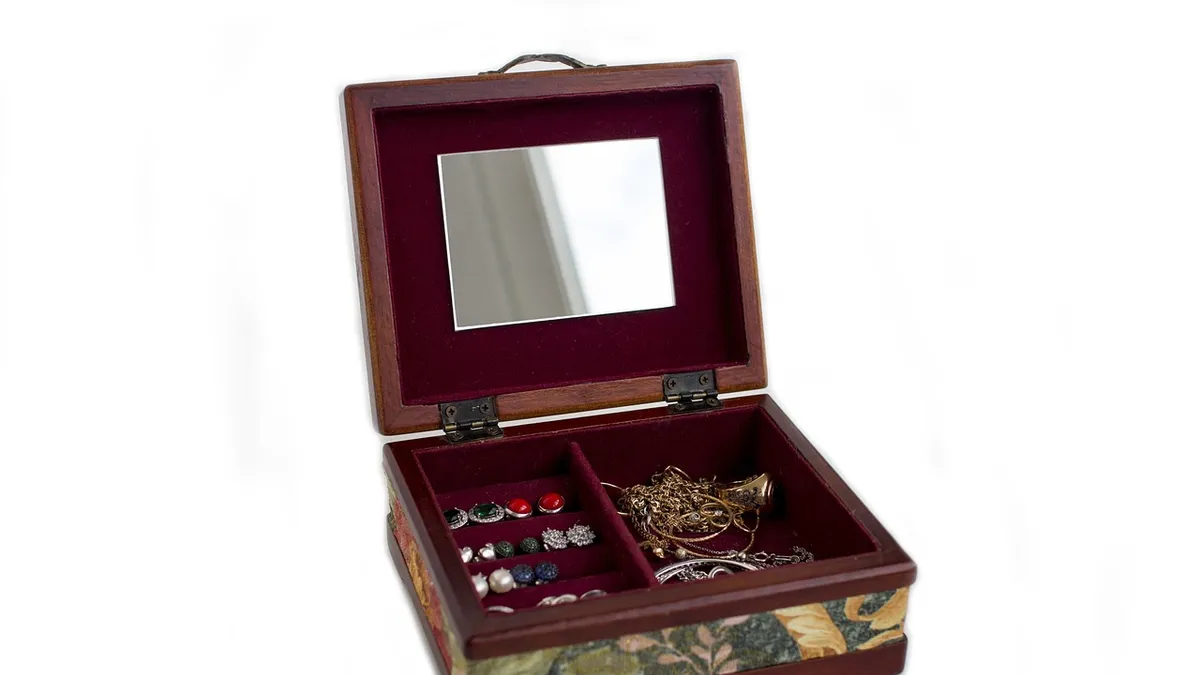
Choosing a jewelry armoire comes down to six questions: how big is your collection, should it mount on the wall or stand on the floor, does the lock need to stop a real thief, is a mirror worth the weight it adds, will the lining actually fight tarnish, and — if it’s wall-mounted — is it anchored safely? There’s no single formula that fits every collection, but answering those six questions in order gets you to the right armoire for your room and your jewelry.
Key takeaways
- Size your armoire to your actual collection, not a generic rule — count your rings, necklaces, earring pairs, and bracelets first. No industry-standard sizing formula exists.
- Wall-mounted units need a wall stud and a landlord’s okay; freestanding units need floor space and a stable base. Pick based on your home, not your style preference alone.
- Most armoire locks are a deterrent, not a security device. The industry standard that covers cabinet locks tests strength and durability, not pick-resistance.
- A mirror adds convenience but also weight and breakage risk — there’s no source ranking one armoire material or finish as objectively “better.”
- If it mounts on the wall, it needs to be anchored to a stud, with hardware rated for its fully loaded weight.
Step 1: How big is your collection?
Start by counting what you actually own: rings, necklace/chain pairs, earring pairs, bracelets, and anything bulkier like watches or brooches. There’s no official industry standard that maps a specific piece count to a specific armoire size — retailers don’t publish one, and no standards body has set one. What you can do is compare your counts to real, named products as reference points. One mid-size armoire on the market offers around 104 ring slots, 18 necklace hooks, 3 bracelet rods, 2 drawers and 4 shelves; a more compact model offers roughly 33 hooks and 75 earring slots at about 47 inches tall. These are examples of what one specific product holds, not a universal rule — use them to get a feel for scale, then check the actual spec sheet of any armoire you’re considering. For the full counting worksheet and more real-product examples, see What Size Jewelry Armoire Do You Need for a Large Collection?
If you’re not sure you’ve outgrown a simple jewelry box yet, Jewelry Armoire vs. Jewelry Box: What’s the Real Difference walks through the warning signs and when the switch actually pays off.

Step 2: Wall-mounted or freestanding?
This decision mostly comes down to your home, not your taste. A wall-mounted armoire needs a stud to anchor into (U.S. homes typically frame studs 16 inches on-center, sometimes 24 inches) and, if you rent, your landlord’s permission to drill. A freestanding armoire needs floor space and a base stable enough that it won’t tip if bumped, especially on thick carpet or padding.
For the full side-by-side comparison — floor type, renter vs. owner, stud access, and collection size — see Wall-Mounted vs. Freestanding Jewelry Armoire: Which Fits? If you go wall-mounted, treat anchoring as mandatory, not optional — How to Anchor a Wall-Mounted Jewelry Armoire Safely covers the hardware and the stud-finding process step by step.
Step 3: Do you need the lock to be real security?
Most jewelry armoires ship with a small cabinet lock, usually a simple cam lock. There is a real industry standard for cabinet locks — ANSI/BHMA A156.11 — with graded tiers for operational cycling and strength. What that standard does not test is pick-resistance or resistance to simple bypass techniques like shimming. In plain terms: a cabinet lock can be well-built and still easy for someone determined to get past. Treat the lock on your armoire as a deterrent against casual snooping, not as protection for anything irreplaceable. For the full explanation of what these locks do and don’t stop, and what to pair them with, see Are Jewelry Armoire Locks Actually Secure?
Step 4: Is the mirror worth the trade-off?
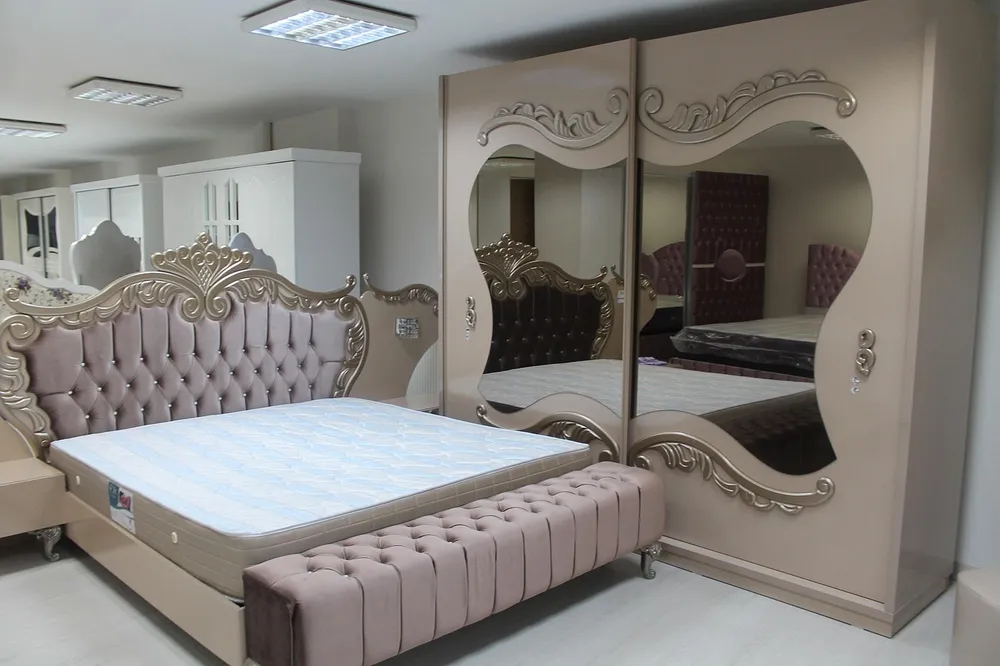
Many armoires include a built-in mirror, either on the front door or inside the lid. It’s a genuine convenience for trying on jewelry, but it adds weight (relevant if you’re wall-mounting) and a breakage risk that a solid door doesn’t have. No source we found ranks one wood type, finish, or veneer as objectively better for jewelry armoires specifically — solid wood and engineered wood/MDF differ mainly in weight and durability, not in some scored quality ranking. Decide the mirror question based on whether you’ll actually use it, not on marketing language about “premium” materials.
Step 5: Will the lining actually fight tarnish?
Not every soft lining does the same job. Plain velvet or microsuede is decorative only — it has no chemical action against tarnish. True anti-tarnish cloth (the Pacific Silvercloth type) works because it’s cotton flannel embedded with fine silver particles that chemically absorb sulfur gases before they reach your jewelry. Conservation guidance also points to keeping humidity low (around 40% or lower) and using sulfur-free tissue or sealed bags for pieces you store long-term. For the full lining comparison and what “anti-tarnish” actually means on a product label, see Anti-Tarnish Lining Materials for Jewelry Armoires, Explained.
Step 6: How will you organize and protect what’s inside?
Once you’ve picked the armoire, the interior layout determines how well it actually works day to day. Match each jewelry type to the right compartment — hooks for necklaces, slots for rings, rods for bracelets — rather than piling everything into one open tray. See How to Organize a Jewelry Armoire by Type for the full compartment matchup.
Necklaces in particular tend to tangle if they’re crowded onto too few hooks or piled together. The fix is mechanical, not magic: one chain per hook, with enough spacing that chains don’t touch. How to Stop Necklaces From Tangling in a Jewelry Armoire covers the hook-spacing method and a quick fix if your armoire is already overcrowded.
On a budget? Consider converting a dresser
A jewelry armoire isn’t the only way to get organized storage. An old dresser can be converted into dedicated jewelry storage with a lined drawer, added hooks, and a simple lock, usually at a lower cost than buying new. See How to Convert an Old Dresser Into a Jewelry Armoire for the tools, steps, and lining method.
The complete decision checklist
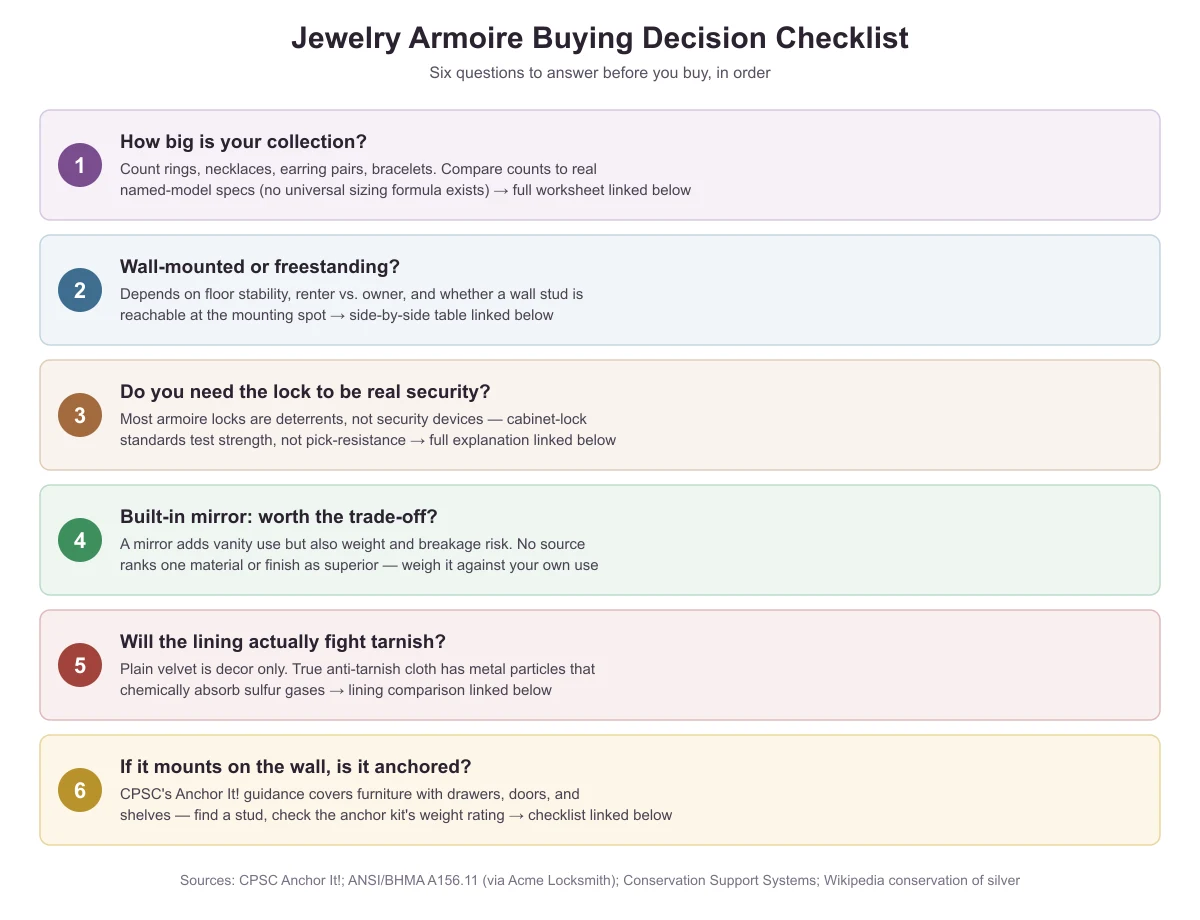
Here’s every decision from this guide in one place. Work through it top to bottom.
| Question | What decides it | Where to go deeper |
|---|---|---|
| How big is your collection? | Count rings, necklaces, earring pairs, bracelets | Sizing worksheet |
| Wall-mounted or freestanding? | Stud access, renter status, floor stability | Wall vs. freestanding |
| Box or armoire? | How crowded your current storage is | Armoire vs. box |
| Is the lock real security? | What ANSI/BHMA lock grades actually test | Lock security explained |
| Will the lining fight tarnish? | Treated cloth vs. plain decorative fabric | Lining materials explained |
| How do you organize the inside? | Matching compartment type to jewelry type | Organize by type |
| Are your necklaces tangling? | Hook spacing and one-chain-per-hook method | Stop tangling |
| Is it anchored if wall-mounted? | Stud location and anchor kit weight rating | Anchoring checklist |
| On a tight budget? | Convert a dresser instead of buying new | DIY dresser conversion |
Frequently asked questions
Is a bigger jewelry armoire always better?
Not necessarily. A bigger armoire that doesn’t fit your wall space or room layout, or that overwhelms a small collection, isn’t a good fit just because it has more slots. Match the size to your actual collection and your room, not to the largest model available.
Do I need both a lock and anti-tarnish lining?
They solve different problems. A lock deters casual access; anti-tarnish lining protects silver and other sulfur-sensitive metals from discoloring over time. Most mid-range and higher armoires include both, but neither one substitutes for the other.
Should I buy new or convert an old dresser?
It depends on budget and how custom you want the interior. A new armoire comes with built-in compartments already sized for jewelry. A converted dresser costs less up front but takes time and basic tools to line and divide properly.
What’s the single biggest mistake people make when buying one?
Buying based on looks alone and skipping the anchoring question. A beautiful wall-mounted armoire that isn’t anchored to a stud is a genuine tip-over and pull-down risk once it’s loaded with jewelry.
Sources
- U.S. Consumer Product Safety Commission, Anchor It! campaign, and “What You’ll Need” — anchoring guidance applies to furniture with drawers, doors, and shelves. Checked November 2026.
- ANSI/BHMA A156.11 cabinet lock standard listing, via ANSI; plain-language explanation via Acme Locksmith, “BHMA Lock Rating” — grades test strength and durability, not pick-resistance.
- Conservation Support Systems, Pacific Silvercloth product page — how true anti-tarnish cloth works chemically.
- Wikipedia, Wall stud — 16-inch on-center standard residential framing spacing.
- Real-product sizing examples: Target (Songmics jewelry cabinet) and Wayfair jewelry armoire listings, checked November 2026.
jewelryarmoireguide.com Editorial Team. Last updated: November 13, 2026.
Leave a Reply