Only lining that is chemically treated — true anti-tarnish cloth like Pacific Silvercloth-type flannel, or microsuede and felt marketed specifically as anti-tarnish — actually slows tarnish, because it has fine silver particles embedded in the fabric that absorb sulfur gases. Plain, untreated velvet, microsuede, or felt is a soft cushion only; it has no chemical action against tarnish at all.
Key takeaways
- “Soft” and “anti-tarnish” are not the same thing. A fabric only slows tarnish if it’s chemically treated or has reactive metal embedded in it.
- True anti-tarnish cloth works by chemistry, not cushioning. Fine silver particles in the fabric absorb sulfur gases before those gases reach your jewelry.
- Untreated velvet, microsuede, and felt are decor-only. They protect against scratches, not tarnish.
- Read the product listing carefully. Words like “treated” or “anti-tarnish” point to real chemistry; “velvet-lined” alone usually doesn’t.
- Humidity matters too. Keeping storage relatively dry helps regardless of which lining you have.
What actually causes tarnish, and how does lining stop it?
Tarnish on silver and silver-plated jewelry forms when the metal reacts with sulfur-containing gases in the air, mainly hydrogen sulfide and related compounds called mercaptans. True anti-tarnish cloth, the kind sold under names like Pacific Silvercloth, is cotton flannel with fine silver particles embedded directly into the fabric. Those embedded particles chemically react with sulfur gases first, pulling them out of the air inside the armoire before they can reach the silver jewelry stored against or near the cloth.
That’s a real chemical mechanism, not just a soft surface to rest jewelry on. Plain velvet, untreated microsuede, and plain felt have no embedded reactive metal and nothing in them to absorb sulfur gases. They’re comfortable, scratch-reducing linings, and that’s a genuine benefit, but they do nothing to slow the chemical reaction that causes tarnish.
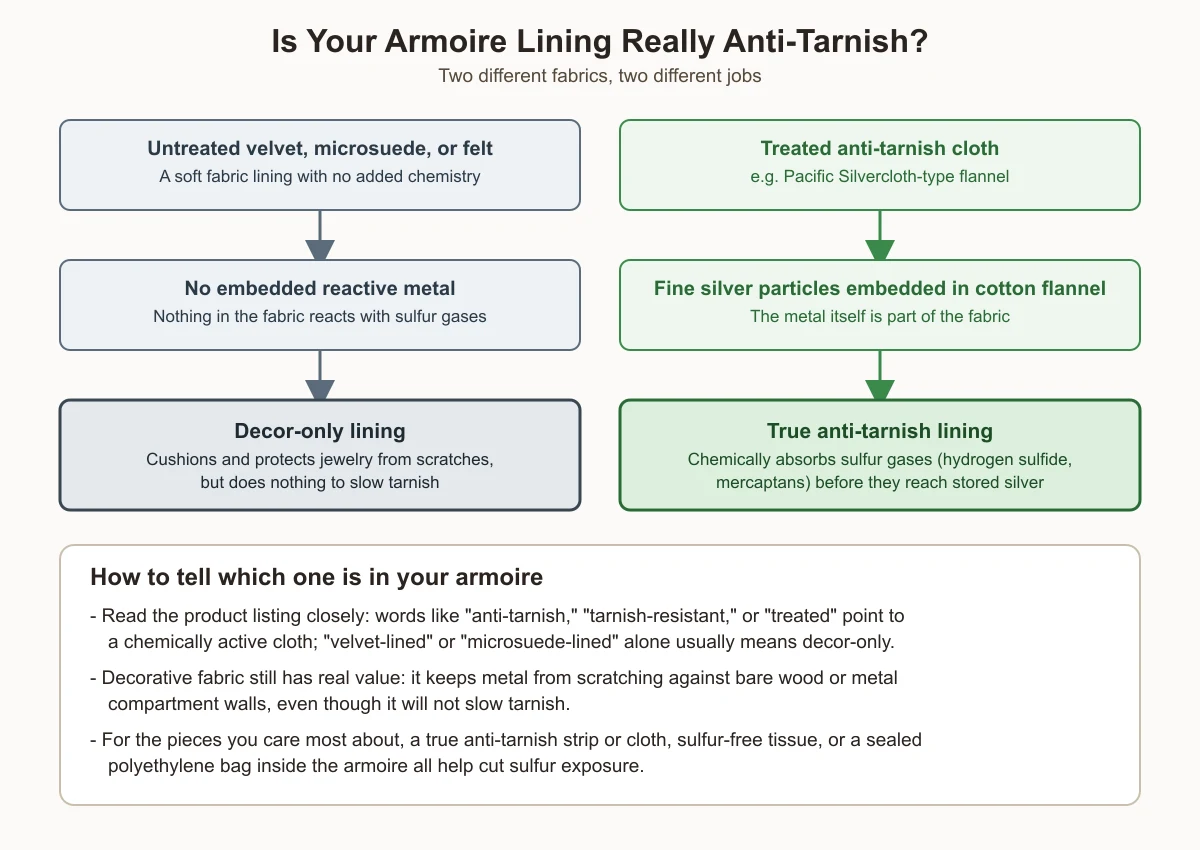
Lining material comparison: true anti-tarnish vs. décor-only
| Lining material | True anti-tarnish or décor-only? | Why |
|---|---|---|
| Pacific Silvercloth-type cloth | True anti-tarnish | Cotton flannel with fine silver particles embedded in the fabric that chemically absorb sulfur gases |
| Microsuede or felt marketed as “anti-tarnish” or “treated” | True anti-tarnish (generally) | Products sold this way typically rely on the same embedded-metal or chemical-treatment principle as Pacific Silvercloth, though exact formulations vary by maker |
| Untreated microsuede | Décor-only | Soft synthetic fabric with no reactive metal or chemical treatment against tarnish |
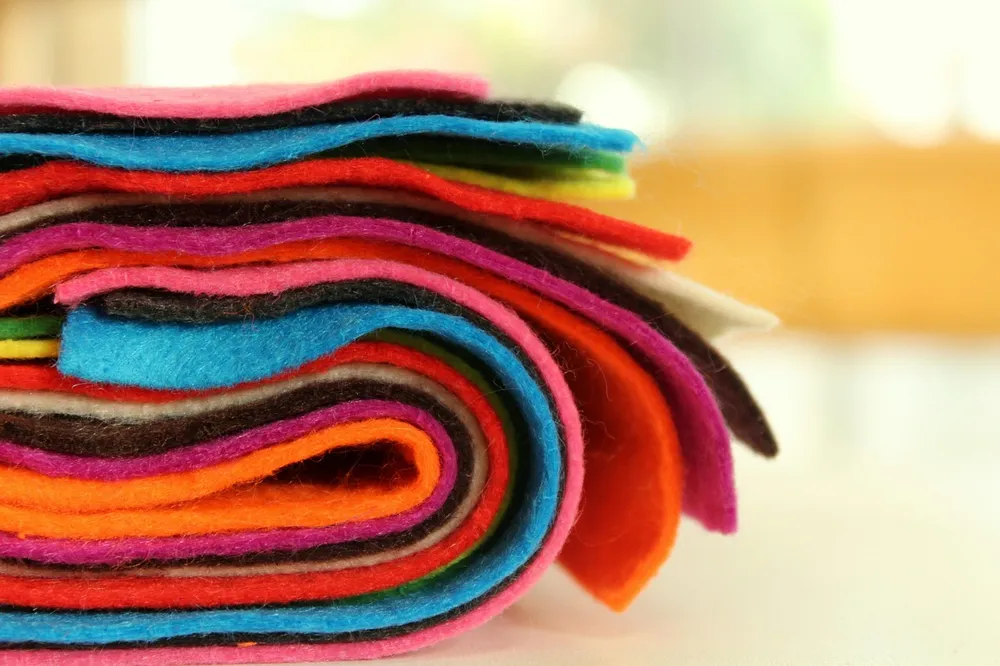
| Untreated felt | Décor-only | Plain wool or synthetic fiber; cushions jewelry but does not react with sulfur gases |
| Plain velvet | Décor-only | A decorative, soft-pile fabric with no anti-tarnish treatment |
For the piece of your collection most prone to tarnish, the lining comparison above matters more than how your armoire looks on the outside. Our Jewelry Armoire Buying Guide covers lining as one of several decision factors alongside size, lock type, and mirror trade-offs.
How can you tell which lining your armoire actually has?
Check the exact wording in the product listing or owner’s manual, not just the color or feel of the fabric. Listings that say “anti-tarnish,” “tarnish-resistant,” or “treated” lining are describing a chemically active fabric. Listings that only say “velvet-lined” or “microsuede-lined,” with no mention of tarnish resistance, are almost always describing a decorative lining only. If you’re not sure and the listing is ambiguous, assume it’s decorative until you can confirm otherwise with the maker.
Decorative lining is still worth having. It keeps metal jewelry from scratching directly against bare wood or metal compartment walls, which matters for both silver and non-silver pieces. It just isn’t doing anything chemical to stop tarnish, so pair it with the humidity and storage steps below if tarnish prevention matters to you.
How often should you replace or refresh anti-tarnish lining?
There’s no independently verified replacement schedule for anti-tarnish cloth inside a jewelry armoire — treat any specific interval you see quoted online as a general rule of thumb, not a tested fact. A more reliable cue is visual: refresh or replace the lining once it looks dull, discolored, or worn, since that discoloration is the embedded silver doing its job by reacting with sulfur in the air.
For reference, Conservation Support Systems’ own product page for Pacific Silvercloth states that its treated cloth keeps protecting until it visibly tarnishes, and that it holds up far longer than ordinary, non-impregnated fabric, which the page says typically needs replacing within 5 to 10 years. That figure is the manufacturer’s own claim about its specific product, not an independent lab finding, so use it as a general reference point rather than a universal rule for every anti-tarnish fabric on the market.
Does humidity inside the armoire matter too?
Yes, regardless of which lining you have. General conservation guidance for storing silver recommends keeping relative humidity at or below about 40% where practical, along with sulfur-free tissue paper, a sealed polyethylene bag for pieces you rarely wear, and sometimes a 3M-type anti-tarnish strip or activated charcoal kept out of direct contact with the jewelry. None of these replace a true anti-tarnish lining, but they work alongside one, or help fill the gap if your armoire’s lining is decorative only.
If your collection has grown large enough that lining choice feels like it’s fighting a losing battle against the sheer number of pieces crowded together, the lining may not be the real issue. See What Size Jewelry Armoire Do You Need for a Large Collection? for a worksheet that matches your item counts to real armoire capacities. And if tangled necklaces are part of what’s crowding your lining and causing extra surface contact between pieces, see How to Stop Necklaces From Tangling in a Jewelry Armoire.
Frequently asked questions
Does velvet lining protect jewelry from tarnish?
No. Plain velvet is a decorative, soft-pile fabric with no embedded reactive metal or chemical treatment, so it has no effect on the sulfur-gas reaction that causes tarnish. It’s useful for cushioning and reducing scratches, but it will not slow tarnish the way true anti-tarnish cloth does.
What makes Pacific Silvercloth different from regular fabric?
Pacific Silvercloth is cotton flannel with fine silver particles embedded directly in the fabric. Those particles chemically react with sulfur gases in the air, absorbing them before the gases reach jewelry stored against or near the cloth — a genuine chemical mechanism, not just a soft surface.
Can I tell anti-tarnish lining apart from decorative lining just by touching it?
Usually not reliably. Both can feel similarly soft. The product listing or manufacturer description is a better guide: language like “anti-tarnish” or “treated” indicates chemical treatment, while a plain fabric-type description like “velvet-lined” usually does not.
Is it worth adding a separate anti-tarnish strip if my armoire’s lining is only decorative?
Yes, that’s a reasonable way to add real tarnish protection without replacing the whole lining. A 3M-type anti-tarnish strip or a true anti-tarnish cloth insert, combined with controlling humidity, gives decorative-lined compartments some of the same chemical protection as a built-in treated lining.
Does keeping the armoire humidity low help even with decorative lining?
Yes. Lower relative humidity, generally at or below about 40%, slows the chemical reactions behind tarnish regardless of what the lining is made of. It’s a useful step to pair with any lining type, especially a decorative one with no chemical protection of its own.
Sources
- Conservation Support Systems, Pacific Silvercloth product page — how embedded silver particles in cotton flannel chemically absorb sulfur gases, and the manufacturer’s own comparison of its product’s lifespan to untreated fabric. Checked November 13, 2026.
- Wikipedia, Conservation and restoration of silver objects — recommended storage relative humidity of 40% or lower, sulfur-free tissue, sealed polyethylene bags, 3M-type anti-tarnish strips, and the activated-charcoal method. Checked November 13, 2026.
jewelryarmoireguide.com Editorial Team. Last updated: November 13, 2026.
Leave a Reply