Last updated: November 16, 2026
Quick answer: a sticking jewelry armoire drawer usually takes 3 checks before anything else—tighten the hardware, confirm the cabinet is level, and test the slide. Start with the drawer slide and the drawer front, then check for swollen wood, loose screws, or a frame that is out of level. In many cases, a screwdriver, a little wax, and a careful adjustment solve the problem without replacing the drawer. If the drawer is bent or split, consult a furniture repair professional before you force it.
Key takeaways
- A sticky drawer is usually caused by one of four things: misalignment, loose hardware, swollen wood, or rough slides.
- Start with the smallest fix first. Tighten screws before sanding or replacing parts.
- Wax helps wood-on-wood contact. It is not a cure for bent metal slides, and if the metal is damaged, consult a cabinet repair professional.
- If the drawer binds hard, rubs on one side, or tilts when pulled, the drawer slide or frame alignment is the real issue.
- Stop and get help if the drawer front is cracked, the slide is bent, or the armoire itself rocks because of uneven legs.
What is causing the drawer to stick?
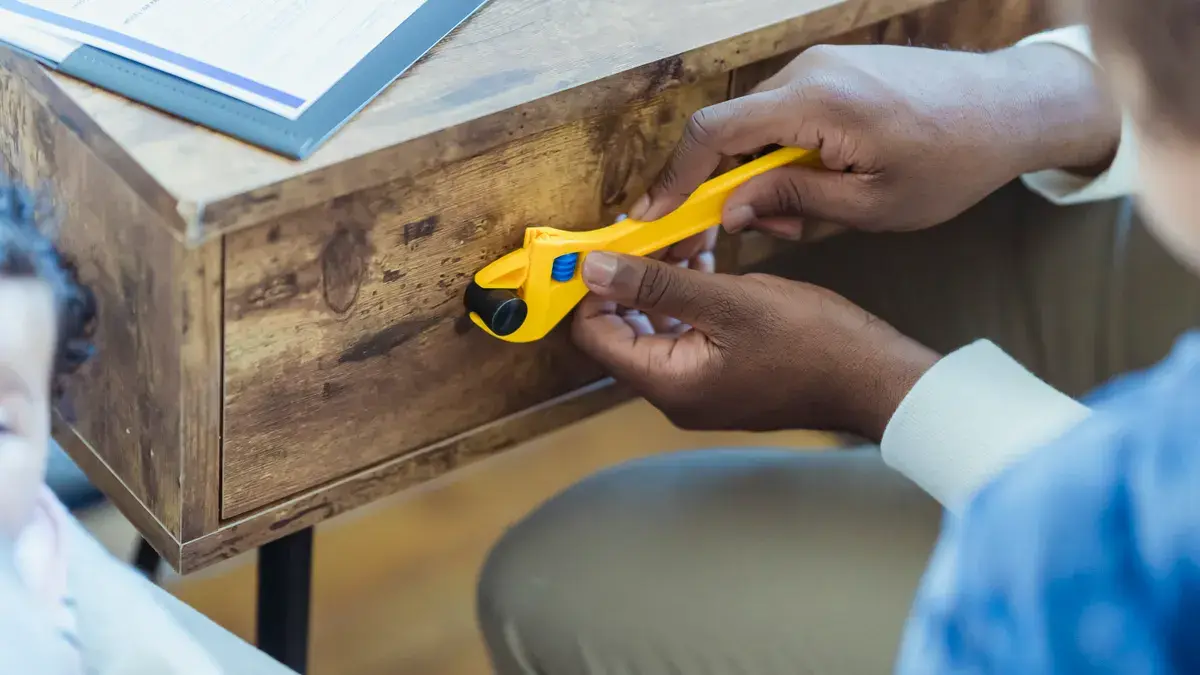
A jewelry armoire drawer usually sticks because something has changed shape, shifted, or loosened. The most common culprits are the drawer slide, the wood around the opening, or the armoire frame being out of level by a small amount that is enough to cause rubbing.
Wood moves with humidity. If the drawer box or opening has swollen, the drawer may feel fine in one season and tight in another. Loose screws can also pull a slide slightly out of line, which makes the drawer drag on one side. If the armoire sits on an uneven floor, the drawer can rack in the opening and stick every time it reaches the same spot. The USDA Forest Products Laboratory’s Wood Handbook explains this movement in plain terms: https://www.fpl.fs.usda.gov/ .
A quick check saves time. Pull the drawer out halfway and look for shiny rub marks on the side, bottom edge, or back corner. That wear pattern usually points to the exact place where the drawer is catching. If the rub is on the slide itself, the slide is the first place to fix. If the rub is on bare wood, the wood fit needs attention.
For a broader furniture reference on wood movement, the USDA Forest Products Laboratory’s Wood Handbook is a useful source: https://www.fpl.fs.usda.gov/ . It explains why wood swells and shrinks with moisture changes.
How do you fix a sticky jewelry armoire drawer?
You fix a sticky jewelry armoire drawer by checking alignment first, then tightening, lubricating, and only then sanding or adjusting the wood. That order matters because it helps prevent you from removing too much material before the simpler fixes are tried; if the fit is still unclear, consult a furniture repair professional.
-
Empty the drawer completely. Take out rings, bracelets, inserts, and any loose trays. A loaded drawer can hide the real problem and adds drag while you test the fit.
-
Pull the drawer all the way out and inspect the slide. Look for bent metal, split wood, missing screws, or a slide that sits crooked. If the drawer uses a simple wood runner, look for worn edges and dark rub marks.
-
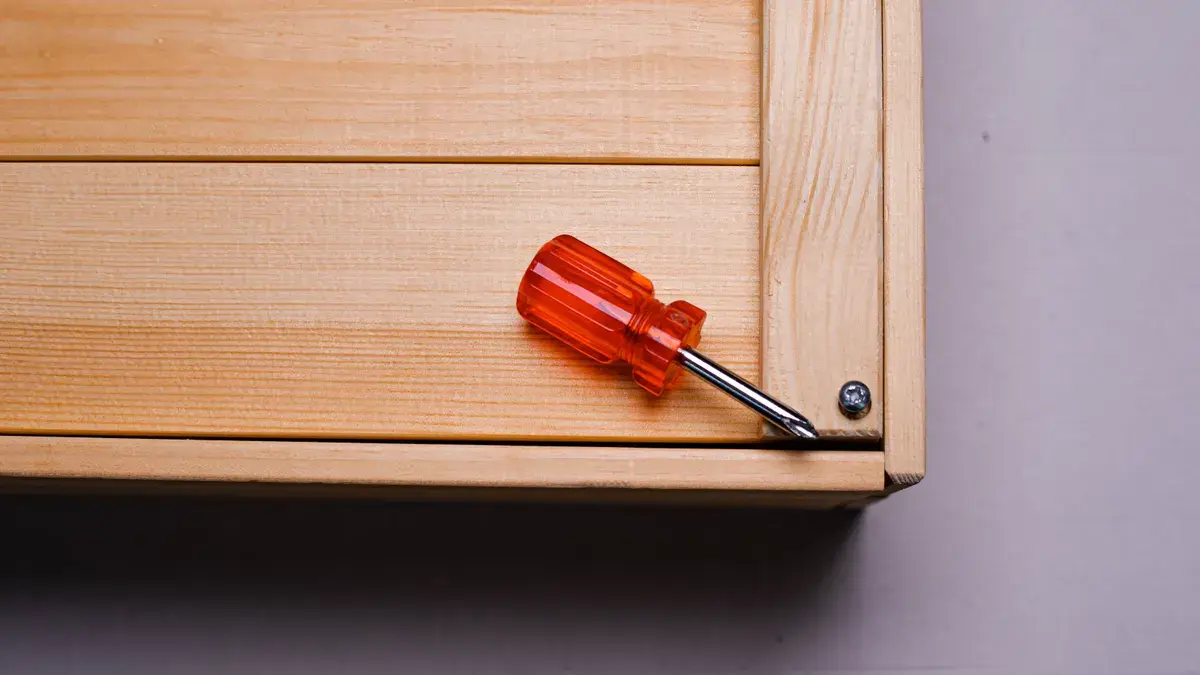
Tighten every visible screw with the right screwdriver. Check both sides of the drawer slide and the armoire frame. A quarter-turn can be enough to bring a loose slide back into line.
-
Check the armoire with a level. If the cabinet leans, the drawer can bind even when the hardware is fine. Adjust the feet or place the armoire on a flatter surface until the bubble sits centered.
-
Rub wax on the contact points. Use a thin coat of wax on wood runners or the edge that drags. A candle wax or furniture wax works better than a wet lubricant on bare wood. Too much wax leaves buildup, so use a light coat only.
-
Test the drawer slowly. Slide it in and out several times. If it still grabs at one spot, stop at that point and look for the exact contact point instead of forcing it.
-
Sand only the rub spot if the drawer still sticks. Use fine sandpaper and remove just enough material to clear the tight area. The goal is a small correction, not a loose fit. A few strokes are often enough.
-
Reinstall and test again. Once the drawer moves smoothly, refill it and check it under normal weight. A drawer that works empty but sticks when loaded may need more support at the slide or front.
This approach is right for a drawer that sticks but is still straight and intact. It is not a good choice if the slide is bent, the front panel is cracked, or the drawer box is split at a joint. In those cases, replacement parts or cabinet repair make more sense than sanding away material.
Which fix should you try first?

The least invasive first fix is the one that changes the least. Tightening screws and checking level should come before sanding, shaving, or replacing parts, because those steps are fast and reversible.
| Symptom | Most likely cause | Best first fix | Trade-off |
|---|---|---|---|
| Drawer rubs on one side | Misaligned slide | Tighten screws and check level | May need a second adjustment |
| Drawer feels sticky all the way in | Swollen wood or dry runner | Apply wax | Wax may need renewal later |
| Drawer catches at one point only | Small high spot or rough edge | Light sanding | Too much sanding makes the fit loose |
| Drawer tilts or drops | Loose or damaged hardware | Inspect and tighten slide hardware | May point to bent parts |
| Drawer binds even when empty | Frame out of square | Level the armoire | Floor or leg adjustment may be needed |
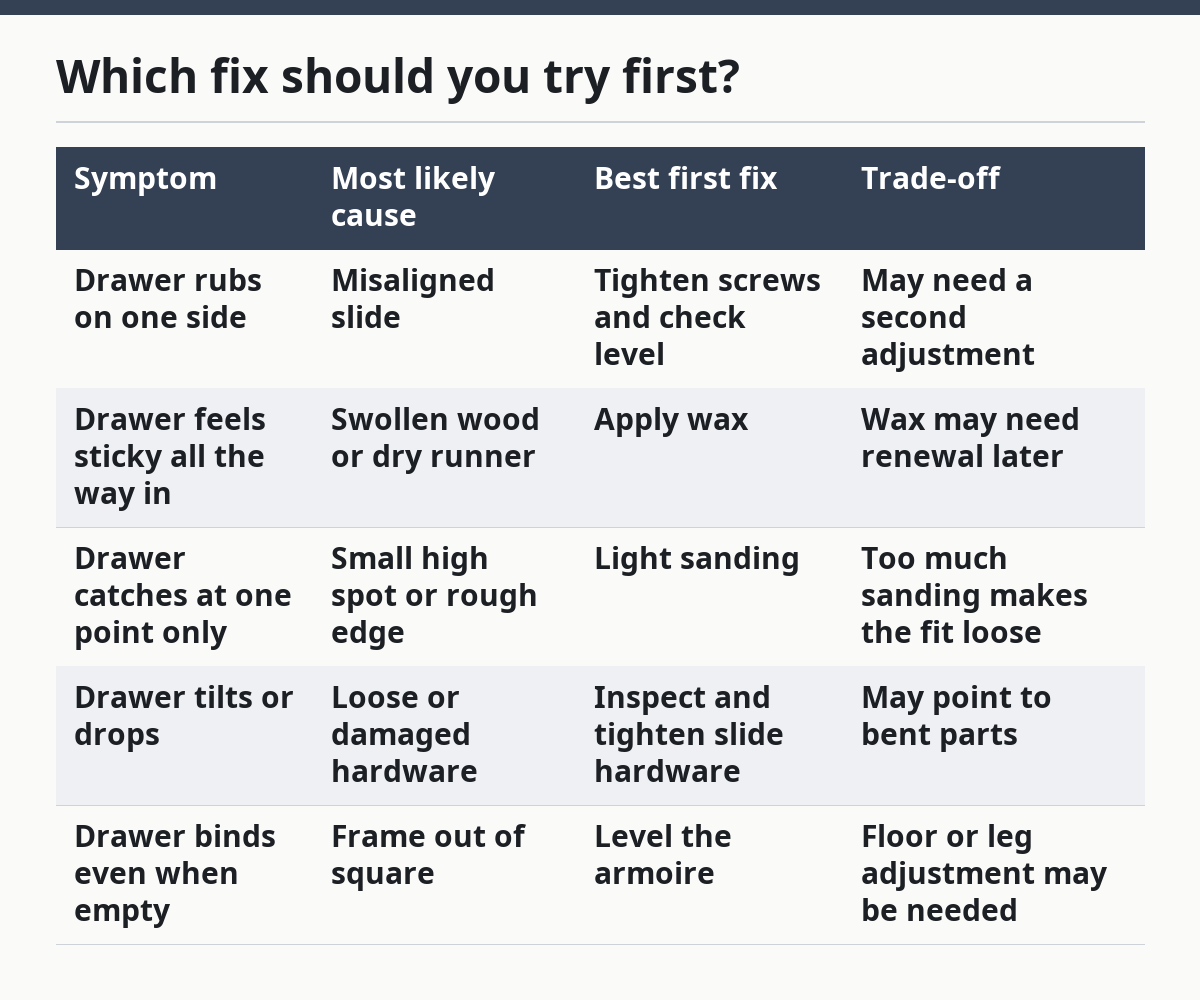
This table matters because the wrong fix wastes time. Sanding a drawer that only needs a screw tightened can create a permanent gap. Waxing a bent slide may hide the problem for a short time, but the drawer will still drag because the metal shape is wrong.
If the drawer is a wood-on-wood design, wax is often the cleanest fix. If the drawer rides on metal drawer slide hardware, lubrication and alignment matter more than sanding the drawer box itself. The part that moves should line up with the part that holds it. For a simple overview of drawer motion and wear, see this related guide: /how-to-fix-drawer-slides.
How do you fix a misaligned drawer in a jewelry armoire?
A misaligned drawer in a jewelry armoire is fixed by resetting the slide position and making sure the cabinet sits level. When the drawer front is visibly higher on one side or the drawer scrapes one edge of the opening, alignment is the problem, not friction alone.
Start by loosening the screws that hold the drawer slide just enough to shift it. Move the slide a small amount, then tighten and test. A shift of only a few millimeters can change the path of the drawer enough to stop the rubbing. If the armoire has more than one drawer, compare the sticking drawer with the ones above or below it so the hardware sits in a consistent line.
Next, check the drawer front itself. A front panel that has drifted out of square can make the drawer look aligned while the box behind it is not. Make sure the gaps around the drawer are even on both sides. Uneven gaps usually mean the slide or drawer box needs a reset.
A level helps here because a cabinet that is even slightly tipped can make a drawer run off-center. If the armoire rocks, fix the base first. Alignment problems often return if the cabinet is still sitting crooked after the repair. For a related step-by-step check, see /how-to-level-furniture.
This is the point where many people make a costly mistake: they sand the drawer to fit the crooked opening. That may make the drawer move today, but it also masks the real cause. A misaligned drawer should be corrected at the hardware or cabinet level first.
For a general hardware reference, the Rockler woodworking library has practical drawer-slide guidance: https://www.rockler.com/ . If the slide itself is damaged, a similar replacement slide is usually the cleaner repair than forcing the old one back into shape.
When should you replace the slide instead of repairing it?
You should replace the drawer slide instead of repairing it when the slide is bent, cracked, warped, or missing parts that keep it from running straight. If tightening and alignment do not change the drag, the slide may no longer be usable.
Replacement makes more sense when the drawer is fine but the motion is rough, jerky, or uneven every time. A worn slide can create the same symptom over and over, even after wax and screw tightening. If the slide has broken bearings, bent rails, or stripped mounting holes, repair often turns into a temporary patch.
Measure the existing slide before buying a new one. Match the length and mounting style so the replacement fits the armoire opening. Drawer slides are not all interchangeable, and forcing the wrong size can make the drawer worse than before. If you cannot find a close match, a cabinet shop can usually help identify the right type. A related fit guide can help before you buy: /measure-drawer-slides.
Replacement is not the first move for a lightly sticky drawer, and it is not the right move if the wood around the opening is swollen from moisture. In that case, the wood needs to dry and settle, or the drawer will still bind even with new hardware.
What mistakes make the problem worse?
The biggest mistake is forcing the drawer closed. That can split the drawer front, bend a slide, or chip the edge of the opening. Once the wood cracks, a simple repair becomes a structural repair.
The second mistake is sanding too much too soon. Removing a lot of material can leave the drawer loose, crooked, or noisy. Fine sanding should be a final fit step, not the starting point.
A third mistake is using too much lubricant. Heavy oil or grease can collect dust and jewelry debris, which makes the drawer feel sticky again later. Wax is usually the cleaner choice on wood contact points because it leaves a thinner film.
Another common miss is ignoring the armoire’s base. If the cabinet sits on a carpet hump, an uneven floorboard, or a leg that is shorter than the others, the drawer can stick even when the slide is perfect. A level check takes less than a minute and can save a long repair.
If the drawer still sticks after tightening, waxing, leveling, and a small fit adjustment, stop there. A bent slide, split side panel, or warped drawer box is beyond a simple touch-up. At that point, a furniture repair professional or cabinet maker is the better call.
Can a jewelry armoire drawer be fixed without taking it apart?
Yes, a jewelry armoire drawer can often be fixed without full disassembly if the issue is loose hardware, dry runners, or minor misalignment. That is often the best-case repair path because it stays quick and low risk.
Work from the outside first. Tighten visible screws, check the level, and apply wax where the drawer rubs. If the drawer only needs a small correction, those steps can restore smooth movement without removing the whole assembly. A drawer that is severely out of square or has a broken slide will usually need removal to repair properly. For a related maintenance check, see /jewelry-armoire-care.
The limit is simple: if you cannot see the contact point, or if the drawer still binds after the easy fixes, stop trying to muscle it. A drawer that requires force is telling you that something deeper is wrong. Pulling harder usually creates damage that was not there at the start.
FAQ
Why does a jewelry armoire drawer stick?
A jewelry armoire drawer sticks because the fit has changed somewhere along the path. The usual causes are loose screws, a crooked slide, swollen wood, or an armoire that sits unevenly on the floor. A quick look at the wear marks usually shows which side is rubbing.
How do you fix a misaligned drawer in a jewelry armoire?
A misaligned drawer is fixed by shifting the drawer slide, tightening the mounting screws, and checking the cabinet with a level. The goal is to restore even gaps and straight movement, not to sand away the drawer until it fits a crooked frame.
Can you replace jewelry armoire drawer slides?
Yes, you can replace jewelry armoire drawer slides if the old slide is bent, worn, or damaged beyond a simple adjustment. The new slide needs to match the old one’s length and mounting style, or the drawer may still drag.
Drafted with AI; not yet reviewed by a person.
Leave a Reply