Last updated: November 12, 2026
Quick Answer: Use 3 controls—dry storage, anti-tarnish strips, and silica gel packets—to slow tarnish in a jewelry armoire. Jewelry tarnishes in a jewelry armoire when air, humidity, and reactive metals sit together too long. The fix is dry, closed storage with anti-tarnish strips, silica gel packets, and lined drawers. To stop jewelry from tarnishing in a jewelry armoire, keep the cabinet dry and enclosed; the steps below show what to set up and what to skip.
Key Takeaways
- Keep the armoire dry, not just closed.
- Use silica gel packets to pull down moisture inside drawers.
- Add anti-tarnish strips where silver and other tarnish-prone pieces sit.
- Store silver jewelry and gold jewelry differently when mixed metals are involved.
- Don’t trap damp jewelry in a drawer, even for one night.
- Lined drawers help, but they do not replace moisture control.
- Open storage looks nice and speeds up tarnish.
How do I stop jewelry from tarnishing in a jewelry armoire?

You stop it by lowering moisture, limiting air exposure, and separating pieces that react differently. A jewelry armoire can help, but only if you treat it like a dry cabinet, not a display case; if you are unsure about a specific finish, lining, or storage setup, consult a professional. Silver jewelry needs the most protection; gold jewelry is more stable, but mixed clasps, plated parts, and solder joints can still dull.
Picture this: you open a drawer and see silver earrings with a gray film on the backs, while a necklace chain has dark spots near the clasp. That usually means the armoire held too much humidity, or a piece went in damp. The goal is dry, enclosed, lined storage that stays that way every day.
- Place silica gel packets in each drawer to absorb moisture before it settles on metal.
- Add anti-tarnish strips near silver jewelry so the strip can absorb tarnish-causing gases inside the closed space.
- Line drawers with a soft, nonabrasive material so jewelry does not sit against bare wood or rough surfaces.
- Keep pieces separate so chains, rings, and earrings do not rub and transfer oils or residue.
- Store only dry jewelry after wear and cleaning, because trapped moisture speeds up tarnish fast.
- Close the armoire fully after every use so outside air does not keep cycling through the drawers.
- Refresh packets and strips on the schedule on the package, or sooner if the room feels damp.
The catch is simple: a pretty armoire with velvet drawers still fails if the room runs humid. A closet near a bathroom, laundry room, or exterior wall can feed damp air into the cabinet. If the room is the problem, the armoire is only part of the fix. For room-level control, see the guidance on jewelry storage and humidity control.
What belongs inside the armoire and what does not?
Only dry, clean, metal-safe storage belongs inside the armoire. Damp cloths, wet jewelry pouches, perfume bottles, and loose cleaning residue make tarnish worse by adding moisture, chemicals, or both.
Picture this: you tuck a bracelet in after a long day, then toss in a ring still carrying hand lotion and sink moisture. A closed drawer traps that film against the metal for hours. That is how a small habit becomes a dark spot.
- Keep in the drawer: silver jewelry, gold jewelry, stainless pieces, and plated items once they are fully dry.
- Keep out of the drawer: damp microfiber cloths, wet packing paper, perfume bottles, nail polish remover, and liquid cleaners.
- Use separate spots: one section for silver, one for gold, one for plated pieces, because mixed storage can spread residue and scratches.
- Store chains unknotted: tangles force you to handle pieces more often, and extra handling means more skin oils on the metal.
A quick rule helps: if a piece still feels cool, damp, or sticky, it is not ready for the armoire. Leave it out for 10 to 30 minutes after cleaning or after a humid day so the surface is truly dry.
On the flip side, very dry rooms can still tarnish silver if the jewelry sits near sulfur in the air from rubber bands, some papers, or unfinished wood. That is why anti-tarnish strips matter even in a tidy drawer. They handle the invisible part. For more on storage materials, see tarnish prevention.
Step-by-step: set up a tarnish-resistant jewelry armoire
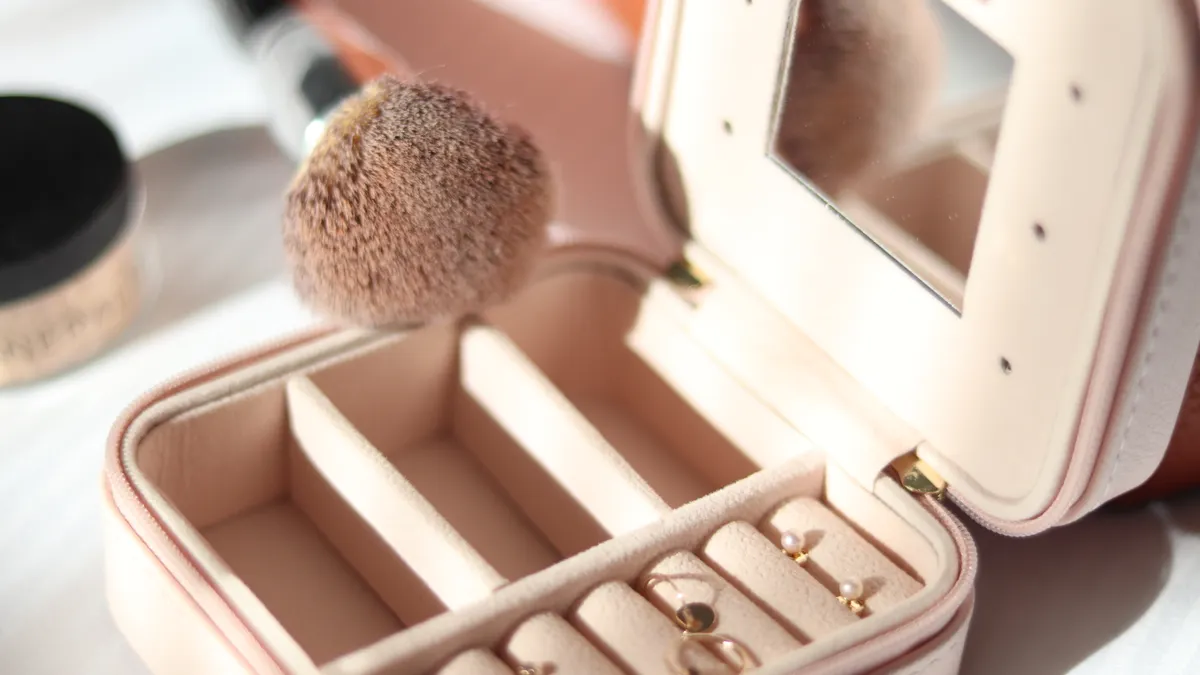
A tarnish-resistant setup takes 10 minutes and three small supplies: silica gel packets, anti-tarnish strips, and drawer liners. This is the part that most generic advice skips, but it is the part that changes the result.
Picture this: you have the armoire open and a pile of rings, chains, and earrings on the dresser. Instead of dropping everything into one drawer, you set the cabinet up once so each piece sits in a drier, calmer space every day.
- Remove loose items from the drawer so the base is clear and the air can move around the liner.
- Place silica gel packets in corners or shallow spots where they will not sit directly against delicate stones or pearls.
- Add anti-tarnish strips near silver pieces, then close the drawer so the protected space stays enclosed.
- Lay a lined drawer insert or soft liner flat so jewelry rests on a clean surface instead of raw wood or rough fabric.
- Group silver jewelry together in one section and gold jewelry in another so the most reactive pieces get the strongest protection.
- Return only dry pieces after wear, and wait until lotion, sweat, or cleaning residue has evaporated.
- Check the drawer monthly for damp packets, worn strips, or jewelry that needs a fresh wipe before storage.
The result you want is not a shiny drawer. It is a drawer that stays neutral enough that silver does not darken quickly and gold keeps its finish longer. If the packets look saturated or the room feels clammy, swap them sooner rather than waiting.
The best part is that you do not need a special model of armoire for this setup. You need better conditions inside the one you already have. A lined drawer with the right inserts beats an empty drawer with no moisture control almost every time. For armoire organization ideas, see jewelry armoire.
Why silver jewelry needs more protection than gold jewelry
Silver jewelry needs more protection because it tarnishes far faster than gold jewelry in ordinary indoor air. Gold jewelry is much more stable, but chains, clasps, solder points, and plated parts can still dull or discolor when they sit in a damp armoire.
Picture this: a sterling silver chain and a gold ring sit side by side in the same drawer for a month. The ring may look fine, while the chain shows dark edges first, especially near links that catch moisture and air. That difference is normal, and it changes how you store them.
- Silver jewelry: use the strongest anti-tarnish protection and keep it in the driest drawer section.
- Gold jewelry: keep it dry and separated, but it usually needs less tarnish control than silver.
- Mixed-metal pieces: treat them like silver if any visible part is silver or plated, because the most reactive part usually fails first; if you are unsure about the finish, consult a professional or the maker.
- Pearls and soft stones: keep them away from damp packets and scented products, since they can be damaged by residue.
Here is the trap: many people store everything together because it looks neat. That saves space, but it also lets silver teach the whole drawer bad habits. One tarnished piece can leave you reaching for polishing cloths more often, and more polishing means more wear.
A better rule is simple. Put the most reactive metal in the most protected spot. Gold can share space with other stable pieces. Silver should get the lined drawer, the anti-tarnish strip, and the driest corner you can give it. For metal-specific care, see silver jewelry care and gold jewelry care.
Common mistakes that make tarnish worse inside an armoire
The most common mistake is storing jewelry that is not fully dry. A damp ring, a bracelet with lotion residue, or a necklace worn in humidity can darken faster inside a closed drawer than it would in open air.
Picture this: you clean a piece, pat it once with a cloth, and put it straight back in the armoire. It feels dry enough. A day later, the hidden side of the setting has a dull film. That is not bad luck. It is trapped moisture.
- Using only the armoire and nothing else leaves humidity unchecked.
- Skipping silica gel packets lets moisture collect in the drawer fabric and around clasps.
- Storing silver and costume pieces together lets the most reactive metals set the pace.
- Leaving drawers partly open invites room air, dust, and humidity to move in.
- Using scented sachets or paper can add chemicals that make tarnish worse, not better.
What to do instead is boring, but it works. Keep the drawer closed, dry, and lightly protected. Replace moisture absorbers before they are exhausted. And do not treat a jewelry armoire like a jewelry box that only needs a pretty lining; if the lining or finish is a concern, consult a professional before changing it.
The truth is, the small habits matter more than the cabinet style. A simple armoire with dry storage beats a fancy one filled with damp pieces and no inserts. That is why the setup matters more than the furniture.
How often should I check the armoire?
You should check the armoire monthly, then sooner in damp weather or if the room is near a bathroom, laundry area, or exterior wall. A 30-second check is enough: look at the silica gel packets, inspect the anti-tarnish strips, and see whether any piece has gone in damp.
Picture this: the drawer looks normal from the outside, but the packets inside feel heavy and the silver clasps look a shade duller than last time. That is your cue to refresh the storage, not the jewelry. Small checks prevent a bigger polishing job later.
- Monthly: inspect packets, strips, and drawer dryness.
- After humid weeks: check more often if the air feels sticky or the room lacks climate control.
- After cleaning jewelry: wait until each piece is fully dry before it goes back.
- After moving the armoire: recheck the drawer because a new location can change humidity fast.
If you want one habit that pays off, make it this: every time you return jewelry to the armoire, pause long enough to see whether it is truly dry. That one habit does more than a drawer full of decorative organizers.
For a broader storage setup, the jewelry armoire guide covers the cabinet itself and how it fits into daily use.
Does a jewelry armoire prevent tarnish?
A jewelry armoire can help prevent tarnish, but it does not do the job by itself. The armoire works only when the drawer stays dry, closed, and lined, with silica gel packets and anti-tarnish strips inside. Without those, silver jewelry can still darken in the same air it would face anywhere else. For general silver-care guidance, see the American Gem Society.
Should I use anti-tarnish strips in a jewelry armoire?
Yes, anti-tarnish strips belong in a jewelry armoire if you store silver jewelry there. They help absorb the gases that speed up tarnish in closed storage. Use them with silica gel packets, not instead of them, because moisture and air pollution are different problems. For storage best practices, see The Jewelry Loupe.
How do I store silver jewelry to keep it from tarnishing?
Store silver jewelry in a dry, lined drawer with anti-tarnish strips and silica gel packets nearby. Keep each piece fully dry, separate it from damp items, and close the armoire after every use. Silver tarnishes faster than gold, so it needs the driest, most protected spot in the cabinet.
Drafted with AI; not yet reviewed by a person.
Leave a Reply